

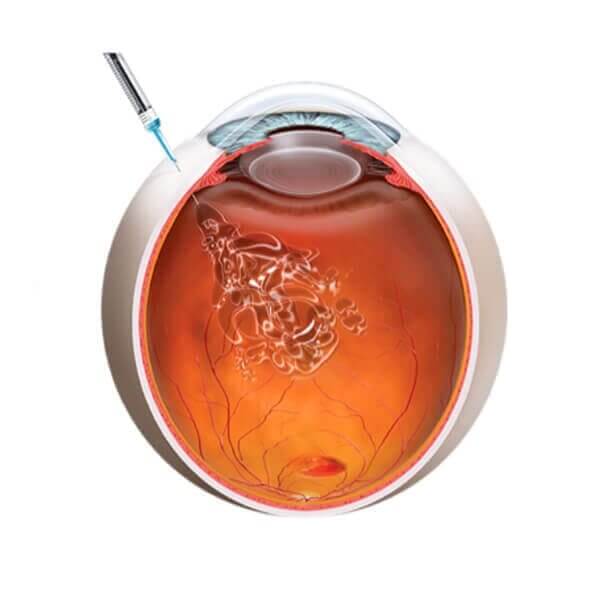
Anti VEGF treatments can help with a variety of eye conditions, including macular degeneration and retinal issues.
VEGF is an angiogenic factor, which means it aids in the formation of new blood vessels. Some VEGF is required for critical bodily functions, but it can also promote abnormal blood vessels and tumour growth.
AntiVEGF treatments can aid in the normalisation of a person's VEGF levels.
Anti VEGF medications target and inhibit VEGF molecules. This slows the rate of cellular growth. When used correctly, this can help to restore normal cellular growth.
The drug is typically administered via injection in a doctor's office for eye health conditions. The number of injections required is determined by your doctor's diagnosis of your condition, and the course of action they believe is best for you. Injections can be given every few weeks or months.
This treatment course can last for quite some time. It can take months or years for a patient to see the full effect.

Anti-VEGF injections are used to treat retinal eye conditions caused by abnormal blood vessel growth or swelling in the retina. They are commonly recommended for wet age-related macular degeneration (AMD), diabetic retinopathy, macular edema, and retinal vein occlusion.
Anti-VEGF injections are generally not painful because numbing eye drops or local anaesthesia are used before the procedure. Patients may feel slight pressure or mild discomfort during the injection, but the treatment is usually quick and safe.
The number of injections depends on the eye condition and its severity. Some patients may require injections every few weeks or months over a longer period to control retinal swelling and prevent vision loss.
Yes, Anti-VEGF treatment can help stabilize vision and, in many cases, improve eyesight by reducing retinal swelling and preventing abnormal blood vessel growth. Early diagnosis and regular follow-up with a retina specialist improve treatment outcomes.
Our Commitment to clinical excellence is lead by our senior doctor, Dr. Himanshu Mehta, a world renowned ophthalmic surgeon, who has performed over 25000 refractive surgeries
2026 All Rights Reserved Vission Eye Center | Design & Developed By Acetrot


Call

Consult


