

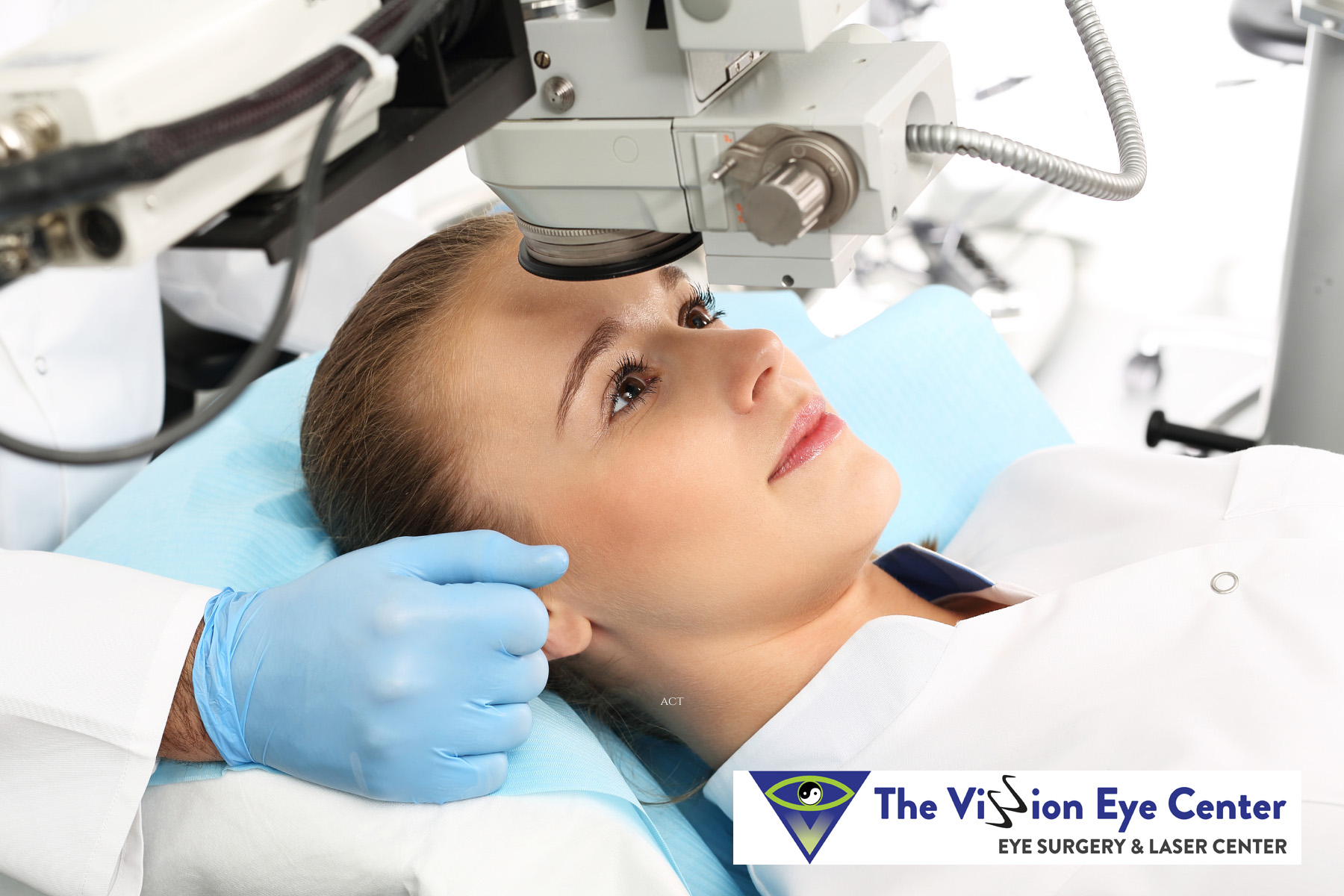
LenSx Cataract Surgery is an advanced form of laser cataract surgery that enhances surgical precision using femtosecond laser technology and real-time imaging. At Vission Eye Center – Eye Surgery & Laser Center, Mumbai, we offer LenSx-assisted cataract surgery for patients seeking enhanced accuracy and optimized visual outcomes.
Laser cataract surgery is an advanced type of cataract surgery that uses femtosecond laser technology laser technology to bring a new level of precision and accuracy to specific steps in cataract surgery that was tradionally performed with hand-help surgical tools.
The steps include:
The added precision, accuracy and reproducibility of each of these steps, when performed with a laser, thus reducing the risks and can improve visual outcomes of cataract surgery.
LenSx technology enhances these steps by combining high-resolution imaging with computer-guided laser delivery.
For a broader understanding of cataract causes and treatment pathways, patients may refer to our main Cataract Surgery in Mumbai page.
In conventional cataract surgery, the surgeon uses a hand-held instrument with a metal or diamond blade to create an incision in the area where the cornea meets the sclera. This incision allows the surgeon to gain access to the interior of the eye to break up and remove the cataract, which is a clouding of the eyes natural lens that is located right behind the pupil.
Next, an intraocular lens (IOL) is inserted and implanted, to replace the cloudy natural lens. The corneal incision is made in special way so it will self-seal when surgery is complete, without any need for stitches.
In laser cataract surgery, the surgeon creates a precise surgical plan for the corneal incision with a sophisticated 3-D image of the eye called an OCT (optical coherence tomography). The goal is to create an incision with a specific location, depth and length in all planes, and with the OCT image and a femtosecond laser, it can be performed exactly without the variable of surgeon experience.
This is important not only for accuracy but also for increasing the likelihood that the incision will be self-sealing at the end of the procedure, which reduces the risk of infection.
The eyes natural lens is surrounded by a very thin, clear capsule. In cataract surgery, the front portion of the capsule is removed in a step called an anterior capsulotomy. This enable the surgeon to gain direct access to the cloudy lens.
Its very important that the remainder of the lens capsule that remains intact in the eye is not damaged during cataract surgery, because it must hold the artificial lens implant in place for the rest of the patients life.
In traditional cataract surgery, the surgeon creates an opening in the capsule with a small needle and then uses that same needle or a forceps to tear the capsule in a circular fashion.
In laser cataract surgery, the anterior capsulotomy is performed with a femtosecond laser like the type used in LASIK vision correction surgery. Studies have shown that capsulotomies performed with a laser have greater accuracy and reproducibility.
Studies also have shown that laser capsulotomies enable better centering of the intraocular lens, and IOL positioning is a significant factor in determining final visual outcomes.
After the capsulotomy, the surgeon now has access to the cataract to remove it. In traditional cataract surgery, the ultrasonic device that breaks up the cataract is inserted into the incision. During this phacoemulsification procedure, the ultrasound energy can lead to heat buildup in the incision, which sometimes can burn the incision and negatively affect the visual outcome by actually inducing astigmatism. An incision burn also has a higher chance of leaking and sometimes requires multiple sutures to close.
The laser, on the other hand, softens the cataract as it breaks it up. By breaking up the cataract into smaller, softer pieces, less energy should be needed to remove the cataract, so there should be less chance of burning and distorting the incision. Laser cataract surgery may also reduce the risk of capsule breakage that can cause vision problems after surgery.
The lens capsule is as thin as cellophane wrap and it's important that the portion that is left inside the eye after cataract surgery is undamaged, so it can hold the IOL in the proper position for clear, undistorted vision. The reduced phacoemulsification energy required in laser cataract surgery may also make the procedure safer to the inner eye, which reduces the chance of certain complications, such as a detached retina.
To reduce the need for prescription eyeglasses or reading glasses after cataract surgery, it is important that little or no astigmatism is present after implantation of presbyopia-correcting multifocal IOLs and accommodating IOLs.
Astigmatism usually is caused by the cornea being more curved in one meridian than others.
To reduce astigmatism, small incisions can be placed in the periphery of the more curved meridian; as the incisions heal, this meridian flattens slightly to give the cornea a rounder, more symmetrical shape.
This procedure is called limbal relaxing incisions (LRI) or astigmatic keratotomy (AK). Surgeons can perform LRI or AK manually with a diamond blade, and it is quite effective in reducing astigmatism.
During refractive laser-assisted cataract surgery, the OCT image can be used to plan laser LRI or AK incisions in a very precise location, length and depth. This increases the accuracy of the astigmatism-reducing procedure and the probability of good vision without glasses after cataract surgery.

LenSx cataract surgery may be suitable for:
Final suitability is determined after detailed diagnostic evaluation including biometry, corneal mapping and retinal assessment.
Most patients resume normal daily activities soon after surgery, as advised by the surgeon.
LenSx cataract surgery is considered safe and effective when performed by experienced surgeons. As with all intraocular procedures, potential risks include:
Careful surgical planning and postoperative monitoring significantly reduce these risks.
At Vission Eye Center, we combine:
Our approach emphasizes precision, safety and transparent consultation, helping patients make informed decisions about their vision.
The laser performs critical steps such as incision planning and capsulotomy. The surgeon completes remaining parts of the procedure through micro-incisions.
Both methods are effective. LenSx offers enhanced precision and reproducibility in specific surgical steps.
When combined with appropriate premium IOLs and astigmatism correction, dependence on glasses may be significantly reduced.
It is performed under local anaesthesia and is generally comfortable for patients.
If you are considering advanced laser-assisted cataract surgery, a comprehensive evaluation will determine whether LenSx technology is appropriate for your eye condition and lifestyle goals.
Our Commitment to clinical excellence is lead by our senior doctor, Dr. Himanshu Mehta, a world renowned ophthalmic surgeon, who has performed over 25000 refractive surgeries
2026 All Rights Reserved Vission Eye Center | Design & Developed By Acetrot


Call

Consult


